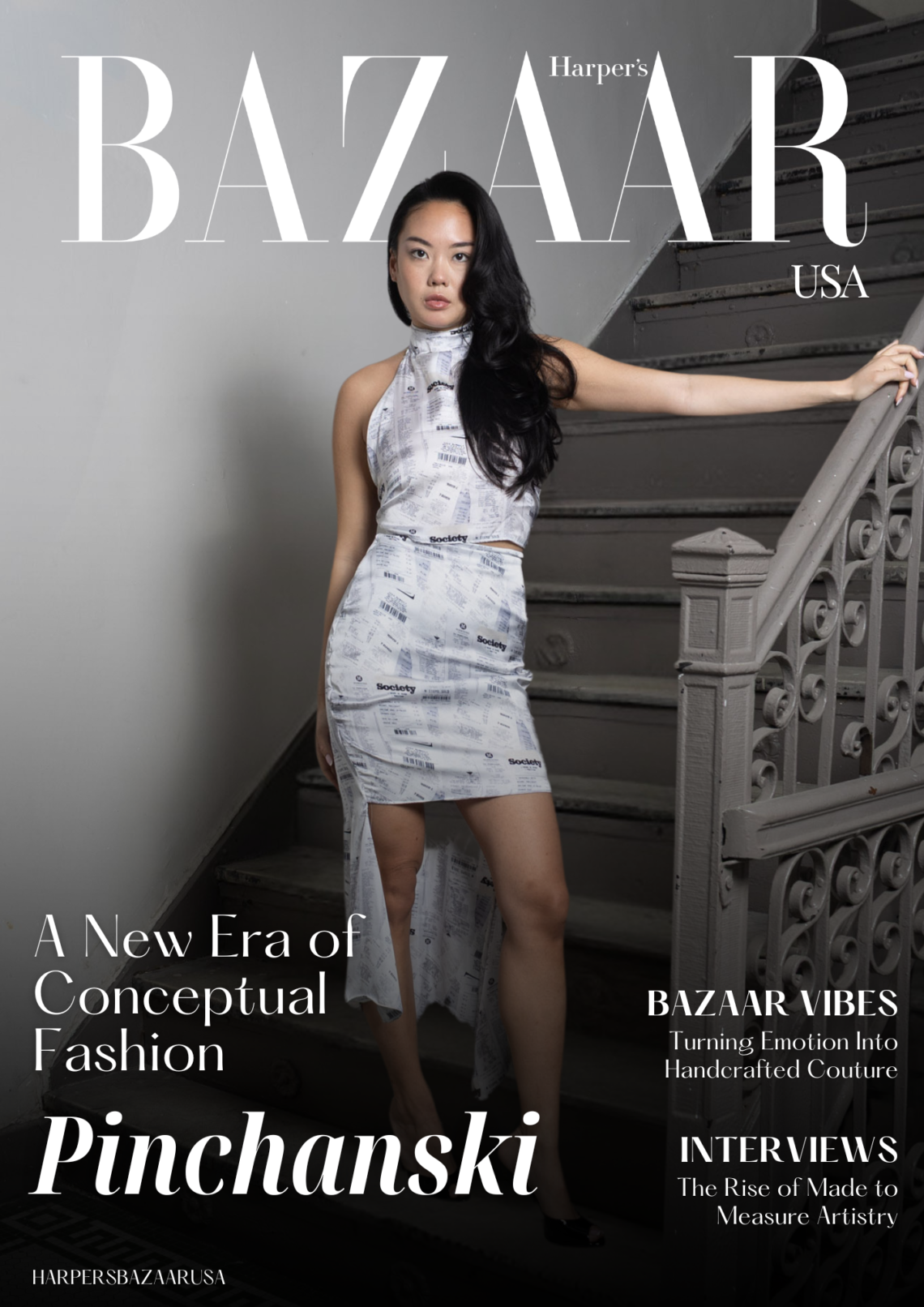
Model: Catherine Quetulio
In an industry often driven by cycles, trends, and fleeting moments, Pinchanski emerges with a vision that feels both deeply personal and intellectually charged. His work does not simply exist within fashion. It lives at the intersection of psychology, art, and craftsmanship, where garments are not just worn but experienced. Each piece tells a story, not through surface aesthetics alone, but through concept, emotion, and meticulous construction.
Pinchanski’s journey into fashion did not begin in a conventional atelier or design school. It started with curiosity and instinct. At the age of fourteen, while immersed in dance, an unexpected opportunity presented itself. A choreographer asked if anyone in the group wanted to design costumes for a performance. While others hesitated, Pinchanski stepped forward. That moment, simple yet decisive, marked the beginning of something much larger than he could have anticipated.
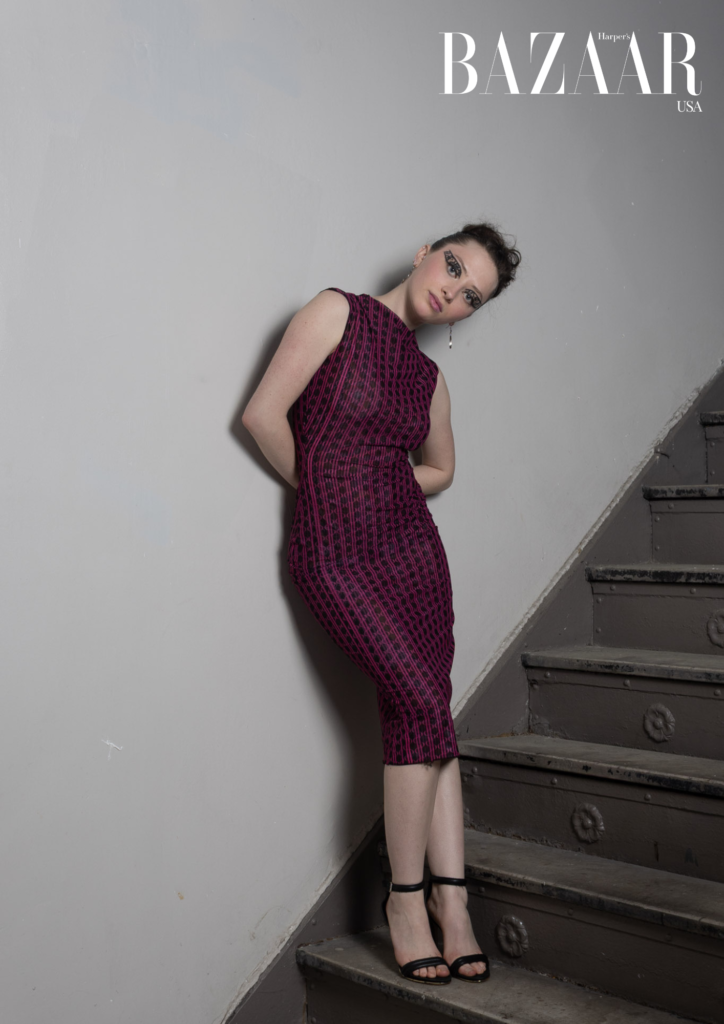
Model: Ruby Carr
What followed was not an immediate plunge into professional design, but years of quiet exploration. Sketching became his language, a way to translate imagination into form. However, there was a gap between vision and execution. Without technical knowledge, those early ideas remained confined to paper. It was not until the age of eighteen that he made a defining decision. He would learn how to sew.
Spring 2023 became a turning point. With determination and discipline, Pinchanski taught himself the technical foundations of garment construction. Sewing was only the beginning. He pushed further into pattern making and draping, developing an understanding of how fabric behaves, how structure forms, and how ideas transform into tangible pieces. This self-taught journey reflects a rare level of commitment, one that continues to define his work today.
Rather than rushing into collections, he chose to refine his craft. He spent time creating individual pieces, each one an exercise in precision and growth. These early works formed the backbone of his portfolio, allowing him to build not just skill, but confidence in his creative direction. By the time he introduced his first collection in May 2025, he was ready to present something fully realized.
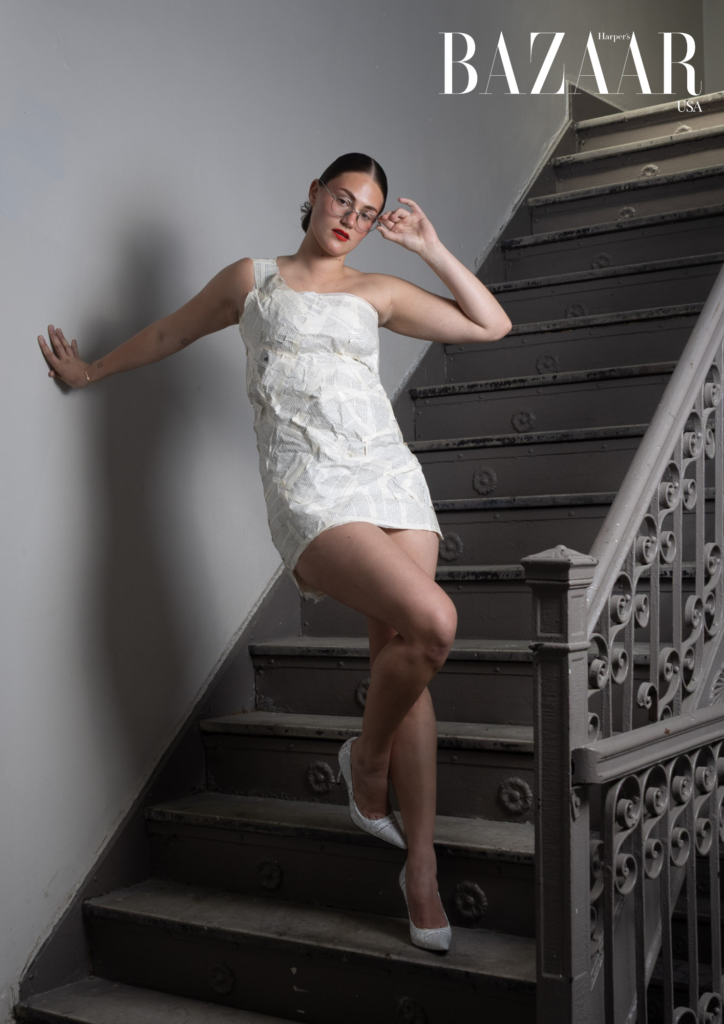
Model: Nicole Poltrioneri
That debut collection, titled The Phobias, was an ambitious statement. Comprising thirty-one looks, every piece was entirely handcrafted by Pinchanski himself. The collection explored fear as a central theme, with each look representing a different phobia. It was not simply about visual representation. It was about translating psychological experiences into wearable art. Silhouettes, textures, and details became expressions of emotion, giving form to the intangible.
What set this collection apart was not only its concept, but its execution. Pinchanski’s process is unlike that of many emerging designers. Before creating the garments, he selects his models and assigns each look specifically to them. Every piece is then made to measure, tailored precisely to the individual who will wear it. This approach extends even to sample pieces, challenging the conventional notion of standardized sizing in fashion.
In a landscape where mass production dominates, his commitment to made to measure design feels both radical and necessary. He identifies a gap in the industry where customization often stops at alteration. True made to measure design, created from the ground up for each individual, remains rare. Pinchanski seeks to redefine this space, offering garments that are not only unique in design but in construction and fit.
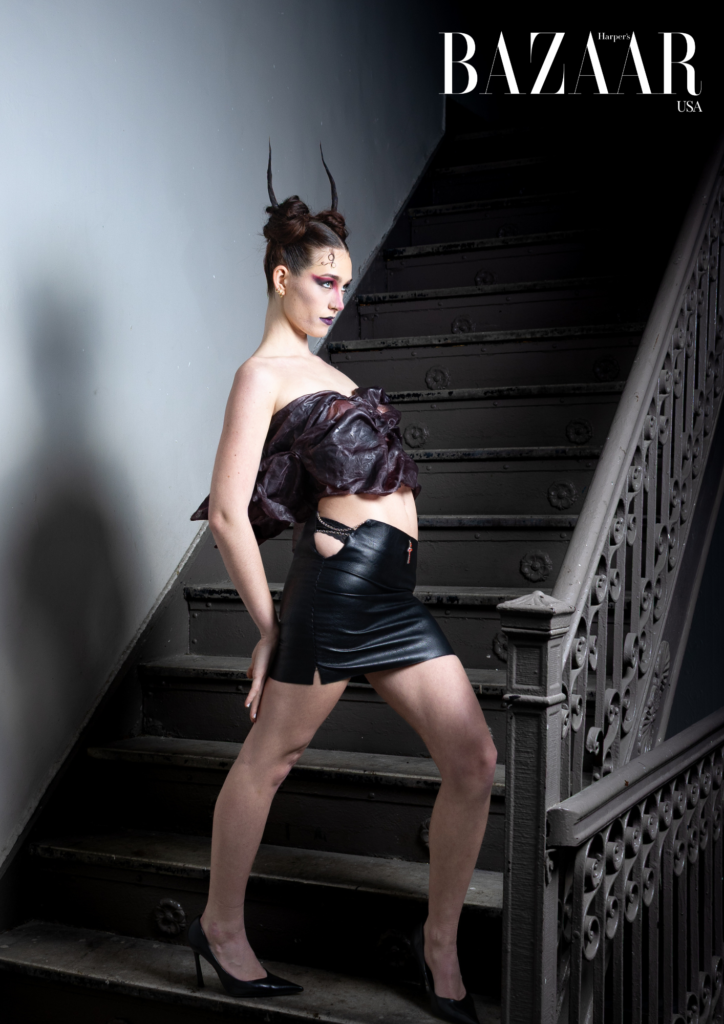
Model: Ashlyn Kirby
Sustainability is another pillar of his philosophy. By focusing on made to measure production, he inherently reduces waste and avoids overproduction. Each piece has a purpose, a wearer, and a story before it is even created. This approach challenges the excess often associated with fashion, presenting a more thoughtful and intentional model for the future.
At the same time, Pinchanski is driven by a desire to restore theatricality to the industry. He observes a growing tendency for brands to design without deeper meaning, prioritizing trends over storytelling. His response is to create collections rooted in strong concepts, where every element, from the garments to the runway presentation, aligns with a central narrative. For him, fashion is not just about clothing. It is about creating an immersive experience.
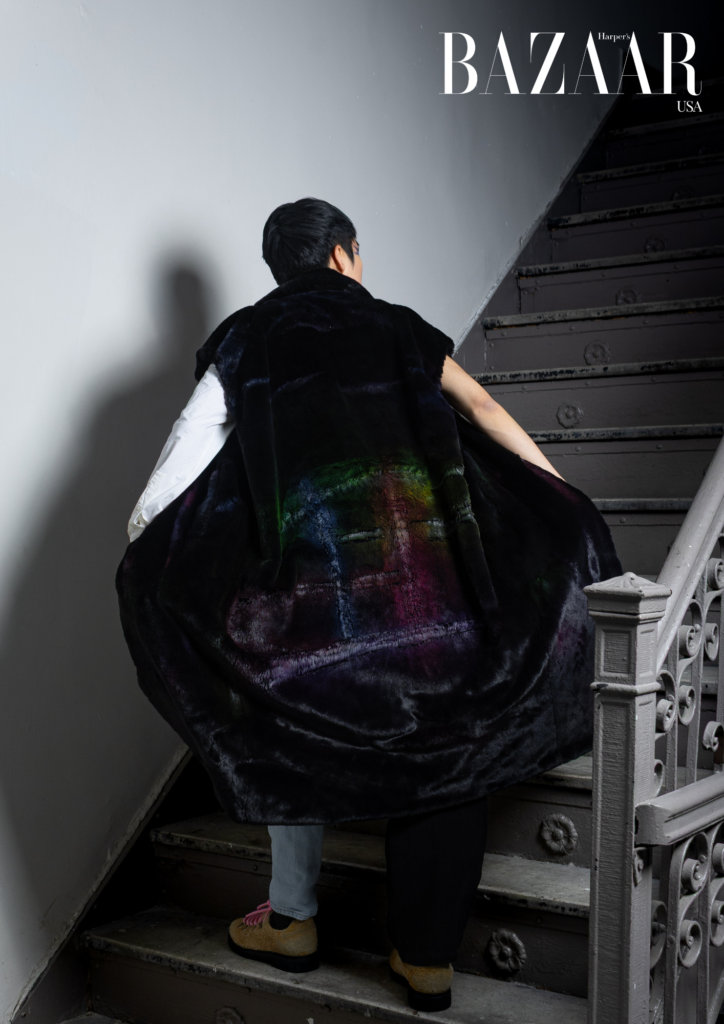
Model: Moon Kim
This commitment to concept is evident in how he approaches each project. Inspiration often begins with an idea that resonates deeply with him. His interest in psychology plays a significant role in shaping his collections. The themes he explores are not random. They are carefully chosen, reflecting both intellectual curiosity and emotional depth.
Following The Phobias, his second collection drew inspiration from the work of H. R. Giger, an artist known for his dark, biomechanical aesthetic. Each look in the collection was influenced by a different artwork, translating Giger’s visual language into fashion. This ability to reinterpret art through garments demonstrates Pinchanski’s versatility and his willingness to engage with complex sources of inspiration.
Now, he prepares to unveil his latest collection, INSANIA. This new body of work serves as a continuation of The Phobias, exploring the other side of the psychological spectrum. Where fear defined the first collection, INSANIA delves into manias. It is a study of intensity, imbalance, and the fragile beauty of the human mind.
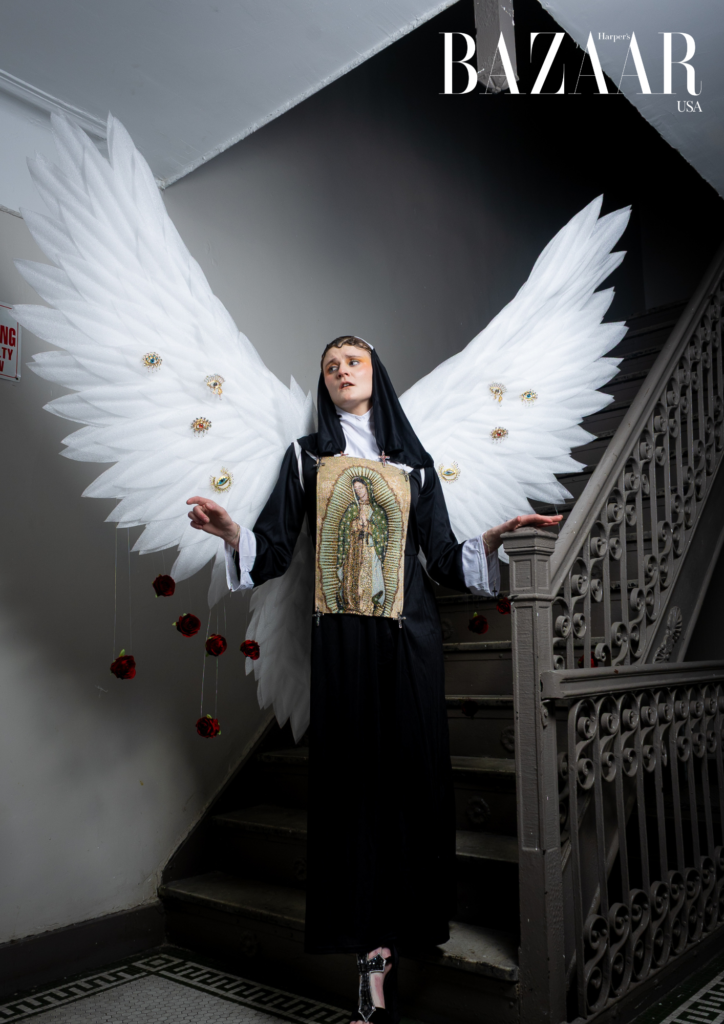
Model: Ellie Duebner
Importantly, Pinchanski does not approach this theme with superficiality. INSANIA is not about romanticizing instability. Instead, it seeks to acknowledge it, to understand it, and to find meaning within it. The collection examines how creativity can emerge from chaos, how emotional extremes can become a form of expression, and how even moments of psychological fracture can lead to something profound.
As with his previous work, INSANIA will be accompanied by a fashion film. This multidisciplinary approach allows him to extend his storytelling beyond the runway, creating a visual narrative that enhances the collection’s concept. It reflects his understanding that modern fashion exists across multiple platforms, where film, digital media, and physical presentation all contribute to the overall experience.
One of the most defining aspects of Pinchanski’s journey is his independence. Every garment is created by his hands, from the initial pattern cutting to the final stitch. This level of involvement is rare, particularly in an industry where production is often outsourced. It speaks to his dedication and his desire to maintain complete control over his work.
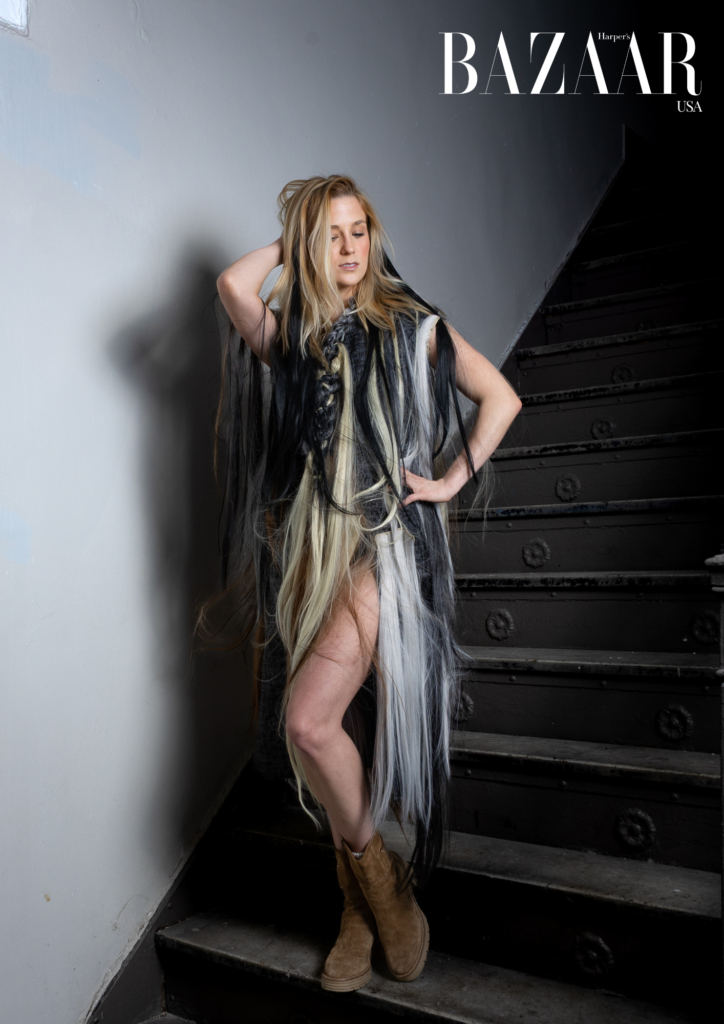
Model: Jessica Hecker
Behind this drive lies a deeply personal source of motivation. Pinchanski credits his mother as his greatest inspiration. Witnessing her resilience and sacrifices has shaped his work ethic and his determination to succeed. Her influence is not only emotional but foundational, guiding his approach to both his career and his life.
For Pinchanski, success is not measured solely by recognition or commercial achievement. It is about impact. He defines success as having his work reach the right audience, those who understand and connect with his vision. More importantly, he hopes his creations inspire others to express themselves, to create, and to embrace their individuality.
This perspective aligns with one of his most significant milestones to date. His fashion film for The Phobias received widespread attention and was nominated for Best Fashion Film in the luxury category at the Berlin Fashion Film Festival. For a debut collection, this recognition was extraordinary. It placed him alongside established names in the industry, affirming the strength of his concept and execution.
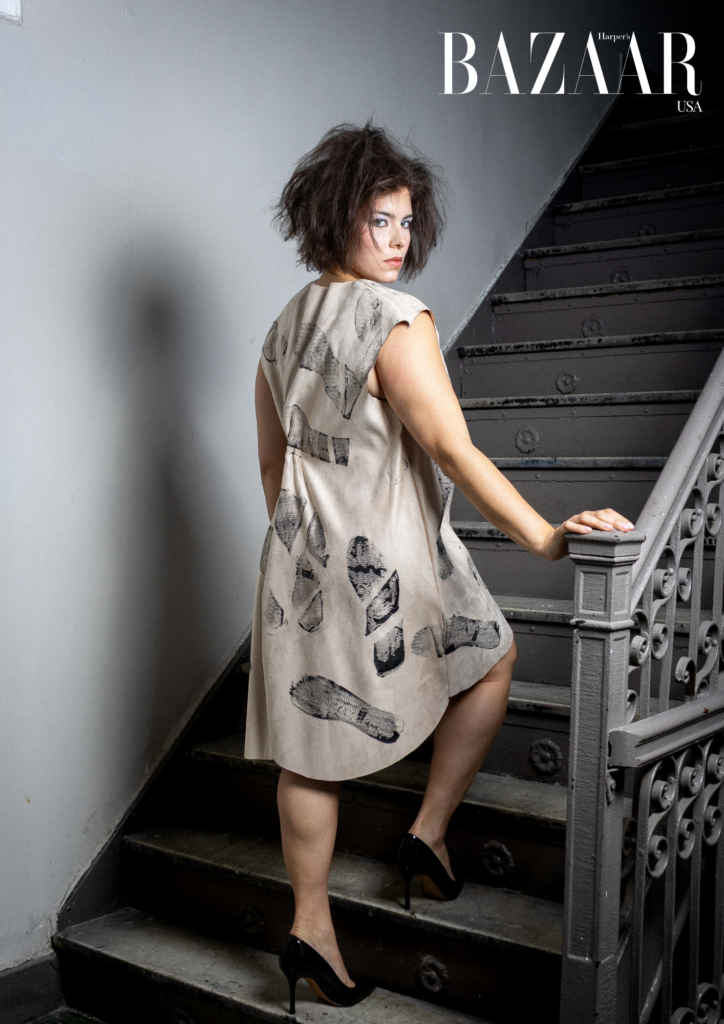
Model: Juliana Kreatsoulas
Yet, even with such achievements, Pinchanski remains focused on growth. Each collection builds upon the last, refining his ideas and expanding his creative language. He is not interested in repetition or comfort. Instead, he continuously challenges himself, exploring new themes and pushing the boundaries of what his work can represent.
As he moves forward, his vision remains clear. He aims to create fashion that is meaningful, sustainable, and deeply connected to human experience. His work invites viewers and wearers alike to engage with complex ideas, to see garments as more than objects, and to appreciate the artistry behind them.
Pinchanski stands at the beginning of what promises to be a compelling career. His approach, rooted in concept, craftsmanship, and authenticity, sets him apart in a crowded industry. He does not follow trends. He creates narratives. He does not produce garments. He builds experiences.
In a world where fashion often moves too quickly to reflect, his work encourages pause and contemplation. It reminds us that clothing can be more than fabric and form. It can be a mirror of the mind, a vessel for emotion, and a powerful medium for storytelling.
Credits:
Photographer: Britany Paez
Hair: Ella Towson
Makeup: Jacey Green