

There was a time when listening was passive. A soft gesture. A polite nod across a dinner table. A courtesy exchanged between people pretending to understand one another while mentally composing the next sentence they wanted to say. But something changed in the modern world. We became louder, faster, more visible, more performative. Entire industries were built around speaking. Around broadcasting. Around being seen.
And somewhere inside all that noise, humanity forgot how to truly listen.
Not simply to words — but to pain. To silence. To grief hidden beneath confidence. To the exhausted tremor inside ambition. To the loneliness disguised as success. To the human nervous system begging to feel safe again.
This is where sacred listening begins.
Not as a trend. Not as a wellness buzzword. But as an act of emotional courage.
The people gathered in this room do not merely create content, music, psychology, speeches, or movements. Each of them has become a translator of human emotion. They stand at the intersection of vulnerability and influence — artists and thinkers who transformed suffering into resonance. They do not just speak to audiences. They make audiences feel heard.
And perhaps that is the rarest luxury of all.
In an era obsessed with algorithms, they chose intimacy. In a culture addicted to stimulation, they chose depth. In a world constantly demanding performance, they became mirrors reflecting the truths most people spend their entire lives avoiding.
This is not simply a story about fame.
It is a story about emotional architecture.
About the invisible frequencies that make people cry during songs, heal during conversations, stay alive after hearing a sentence at the right moment, or finally feel understood after years of silence.
Sacred listening is not weak. It is not passive. It is not soft in the way society often diminishes softness.
Sacred listening changes lives.
And the five people in this feature understand something most institutions still do not: healing does not begin when someone is told what to do. Healing begins the moment someone feels genuinely seen.
Jesse James Ferrell — The Frequency of Presence

There is something unusual about Jesse James Ferrell that becomes visible long before he speaks.
It is not charisma in the traditional sense. Not the rehearsed magnetism of celebrity culture or the polished confidence of media-trained personalities. His energy feels slower than the internet. More grounded than performance. Less interested in impressing than in connecting.
And perhaps that is precisely why people cannot stop listening to him.
Jesse belongs to a new generation of emotional leadership — one not built on domination, perfection, or intellectual superiority, but on resonance. His work exists in the emotional spaces modern society abandoned for productivity. He speaks openly about mental health, emotional pain, trauma, loneliness, nervous system exhaustion, and the invisible cost of trying to survive in a world that rewards disconnection.
But what makes him different is not simply the subject matter.
It is the feeling.
People do not merely consume Jesse’s work. They experience it.
There is a cinematic quality to the emotional universe he creates — one where vulnerability is not framed as weakness, but as a sophisticated form of intelligence. His voice carries the texture of someone who has sat with suffering long enough to stop running from it. And because of that, audiences trust him.
In the attention economy, trust has become priceless.
What Jesse understands intuitively is that modern audiences are starving for emotional permission. Permission to slow down. Permission to admit they are overwhelmed. Permission to stop pretending they are okay.
That emotional honesty is what transformed his work into something larger than content.
He became a space.
A place where people could arrive without armor.
And perhaps this is why his audience continues to grow with unusual intensity. Not because he mastered virality — but because he mastered emotional proximity. In a world filled with motivational noise, Jesse speaks in frequencies that feel human again.
His rise also represents a larger cultural shift.
The future of influence will not belong solely to the loudest people. It will belong to those capable of emotional regulation, nervous system awareness, psychological safety, and authentic resonance. The next generation of leaders will not merely command rooms. They will calm them.
Jesse James Ferrell understands this instinctively.
And that may be why people feel safer after hearing him speak.
Lady Gaga — Turning Pain Into Performance Art

Few modern artists have transformed suffering into visual mythology quite like Lady Gaga.
She did not simply become famous.
She built an emotional language.
For years, the world misunderstood her brilliance because it arrived wrapped in spectacle — avant-garde fashion, surreal performances, theatrical imagery, impossible silhouettes. But beneath the costumes was always something profoundly human: a woman trying to give shape to pain too complex for ordinary conversation.
Lady Gaga turned emotional fragmentation into art.
And millions of people recognized themselves inside it.
What makes her extraordinary is not only talent, though her talent is undeniable. It is her willingness to expose emotional contradiction publicly. She can embody glamour and devastation simultaneously. Strength and fragility. Fame and isolation. Grandeur and grief.
This duality is precisely why audiences trust her.
Because she never pretended transcendence erased suffering.
Instead, she transformed suffering into beauty.
For a generation navigating anxiety, depression, loneliness, identity crises, burnout, and emotional alienation, Gaga became more than an entertainer. She became symbolic permission to exist outside traditional expectations.
Her work repeatedly returns to one essential truth: people are desperate to be loved without needing to become someone else first.
That message changed culture.
Long before conversations around mental health became mainstream, Gaga was speaking openly about trauma, chronic pain, emotional collapse, bullying, and psychological survival. Not carefully packaged versions of struggle designed for public relations campaigns — but raw, uncomfortable truths.
And somehow, instead of diminishing her power, vulnerability amplified it.
Because authenticity creates gravity.
The most fascinating thing about Lady Gaga is that she understands performance psychologically. She knows clothing, music, visual design, movement, and spectacle are not superficial. They are emotional technology. Symbols capable of helping people process identity and emotion.
Fashion becomes armor.
Music becomes catharsis.
Performance becomes healing ritual.
That is why her audience relationship feels spiritual rather than transactional.
Fans do not merely admire her.
They feel understood by her.
And perhaps this is the deepest form of listening possible: the ability to make millions of strangers feel emotionally recognized through art.
Jewel — The Quiet Intelligence of Emotional Truth

If Lady Gaga transformed pain into spectacle, Jewel transformed pain into stillness.
There is a softness to Jewel’s artistry that modern culture often underestimates because it confuses gentleness with simplicity. But her work contains an emotional precision that few artists possess.
She writes like someone excavating memory carefully with bare hands.
Every lyric feels less manufactured than uncovered.
Long before vulnerability became marketable, Jewel was creating music rooted in emotional honesty so raw it bypassed performance entirely. Her songs never demanded attention aggressively. They invited intimacy.
And that invitation changed millions of lives.
What makes Jewel remarkable is not only her voice or songwriting ability. It is her emotional literacy. She understands human contradiction with unusual tenderness. Her work acknowledges heartbreak without cynicism. Pain without bitterness. Hope without naïveté.
That emotional balance is rare.
Especially in modern culture, where extremes often dominate attention.
Jewel’s artistry exists in quieter territory — the emotional spaces where healing actually happens. Not dramatic transformation. Not explosive reinvention. But subtle reconnection with self-worth.
She speaks often about emotional intelligence, nervous system healing, mindfulness, and inner resilience. But unlike many wellness figures, her authority does not come from perfection. It comes from lived experience.
People believe her because she survived herself first.
And perhaps this is what sacred listening truly requires: not expertise detached from suffering, but wisdom earned through it.
Jewel understands something many public figures never learn: audiences do not need perfection from artists. They need emotional honesty.
Her career demonstrates that softness can be revolutionary.
In a culture obsessed with hardness, emotional openness becomes radical.
And perhaps that is why her work continues resonating across generations. Because beneath trends, beneath algorithms, beneath aesthetics, humans remain emotionally ancient creatures.
We still ache for sincerity.
We still recognize truth instinctively.
We still heal when someone speaks gently enough for us to hear ourselves again.
Macklemore — Recovery as Cultural Honesty

Macklemore occupies an unusual place in contemporary culture because he chose confession over image management.
At a time when celebrity branding often depends on emotional control, he repeatedly allowed audiences to witness imperfection publicly. Addiction. Relapse. Shame. Recovery. Fear. Accountability. Vulnerability.
Not polished versions.
Real ones.
That honesty changed the relationship between artist and audience.
Macklemore’s music often feels less like performance and more like public processing. His lyrics carry the emotional texture of someone wrestling visibly with identity, masculinity, addiction, fame, and self-worth in real time.
And because of that transparency, listeners trust him.
Especially people navigating their own battles privately.
Recovery narratives are frequently simplified by media into redemption arcs — dramatic before-and-after stories designed to feel inspirational. But Macklemore resisted that oversimplification. He consistently portrays healing as nonlinear, uncomfortable, repetitive, and deeply human.
That realism matters.
Because shame thrives in silence.
By speaking openly about addiction and emotional struggle, he disrupted the illusion that success eliminates suffering. He exposed the psychological complexity beneath celebrity identity and reminded audiences that healing is not a destination. It is maintenance.
An ongoing relationship with truth.
There is also something culturally important about the way Macklemore discusses masculinity. He does not perform emotional invulnerability. He questions it. Challenges it. Deconstructs it publicly.
In doing so, he expanded emotional permission for men listening to him.
That impact cannot be measured merely through streams or charts.
It exists in conversations between fathers and sons.
In private moments of sobriety.
In late-night realizations that vulnerability does not destroy masculinity — it deepens it.
Macklemore understands that art can become emotional infrastructure.
Not escapism.
Not distraction.
But survival.
And perhaps that is why his work continues resonating long after trends disappear. Because honesty ages better than image.
Gabor Maté — The Philosopher of Human Wounds
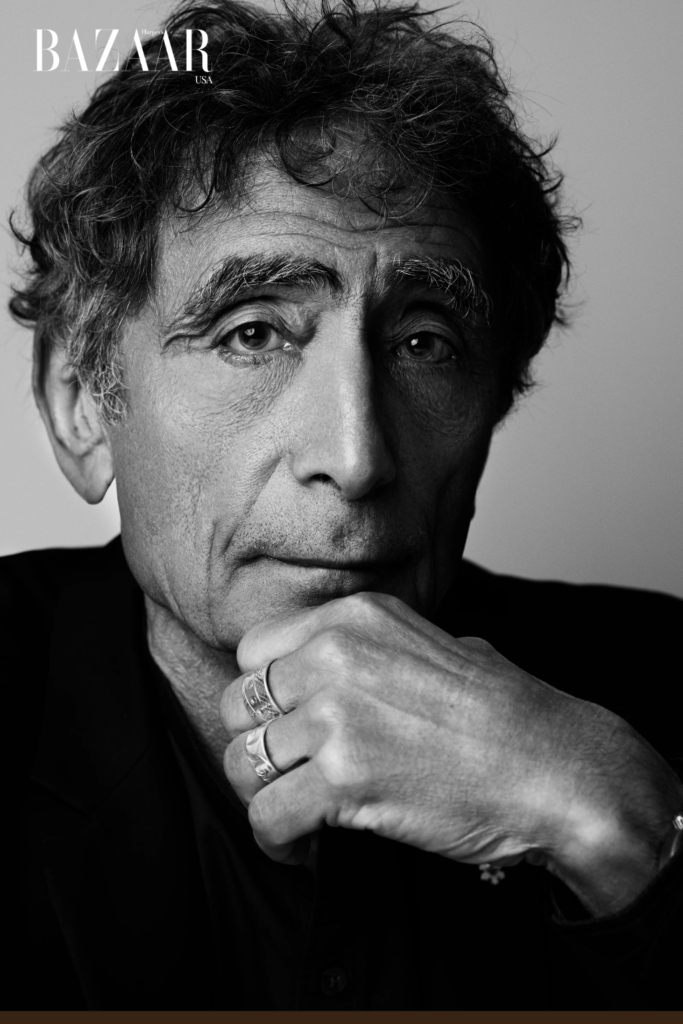
There are people who speak about trauma academically.
And then there is Gabor Maté.
Listening to him feels less like hearing a lecture and more like watching someone gently remove centuries of shame from the human nervous system.
What makes Maté extraordinary is not merely intelligence, though his intellect is profound. It is compassion integrated with clarity. He speaks about trauma, addiction, stress, childhood wounds, emotional repression, and illness without moral judgment.
That alone feels revolutionary.
Modern society often treats suffering as personal failure. Anxiety becomes weakness. Addiction becomes character flaw. Burnout becomes inefficiency. Emotional sensitivity becomes inconvenience.
Maté dismantles these narratives completely.
He reframes pain not as pathology, but as adaptation.
And that shift changes everything.
Because once people stop seeing themselves as broken, healing becomes possible.
His work has fundamentally altered how millions understand trauma. He helped move conversations about mental health away from simplistic self-help language and toward compassionate psychological depth.
But perhaps his greatest contribution is this:
He teaches people how to listen differently.
To symptoms.
To emotions.
To the body.
To addiction.
To illness.
To themselves.
In Maté’s worldview, the body is not betraying us. It is speaking.
And most people were never taught how to hear it.
There is a calmness to his presence that feels almost spiritual. Not performative spirituality — but the grounded stillness of someone deeply committed to human understanding.
That stillness matters.
Especially in a culture addicted to acceleration.
Maté reminds audiences that healing cannot occur inside constant self-abandonment. That emotional suppression carries biological consequences. That compassion is not weakness but medicine.
And perhaps this is why younger generations are gravitating toward his work with such intensity. Because beneath all technological advancement, humans remain emotionally wounded creatures searching for meaning.
Gabor Maté offers something rarer than certainty.
He offers understanding.
What Sacred Listening Really Means
Sacred listening is not simply hearing words.
It is hearing the emotion beneath them.
It is the ability to recognize pain before it becomes destruction. Loneliness before it becomes isolation. Exhaustion before it becomes collapse.
The people in this feature understand something our culture is only beginning to rediscover:
Humans do not heal through perfection.
They heal through resonance.
Through feeling emotionally recognized.
Emotionally safe.
Emotionally understood.
Jesse James Ferrell brings emotional presence.
Lady Gaga transforms pain into artistic liberation.
Jewel creates intimacy through honesty.
Macklemore turns recovery into public truth.
Gabor Maté teaches compassion toward the wounded self.
Different languages.
Different aesthetics.
Different paths.
But the same sacred act.
Listening deeply enough to help people return to themselves.
And perhaps, in the end, that is the future of influence.
Not domination.
Not noise.
But the rare and revolutionary ability to make another human being feel less alone.