Every Chapter Has a Sound
There are careers that unfold according to a clear plan.
Then there are careers that develop through discovery.
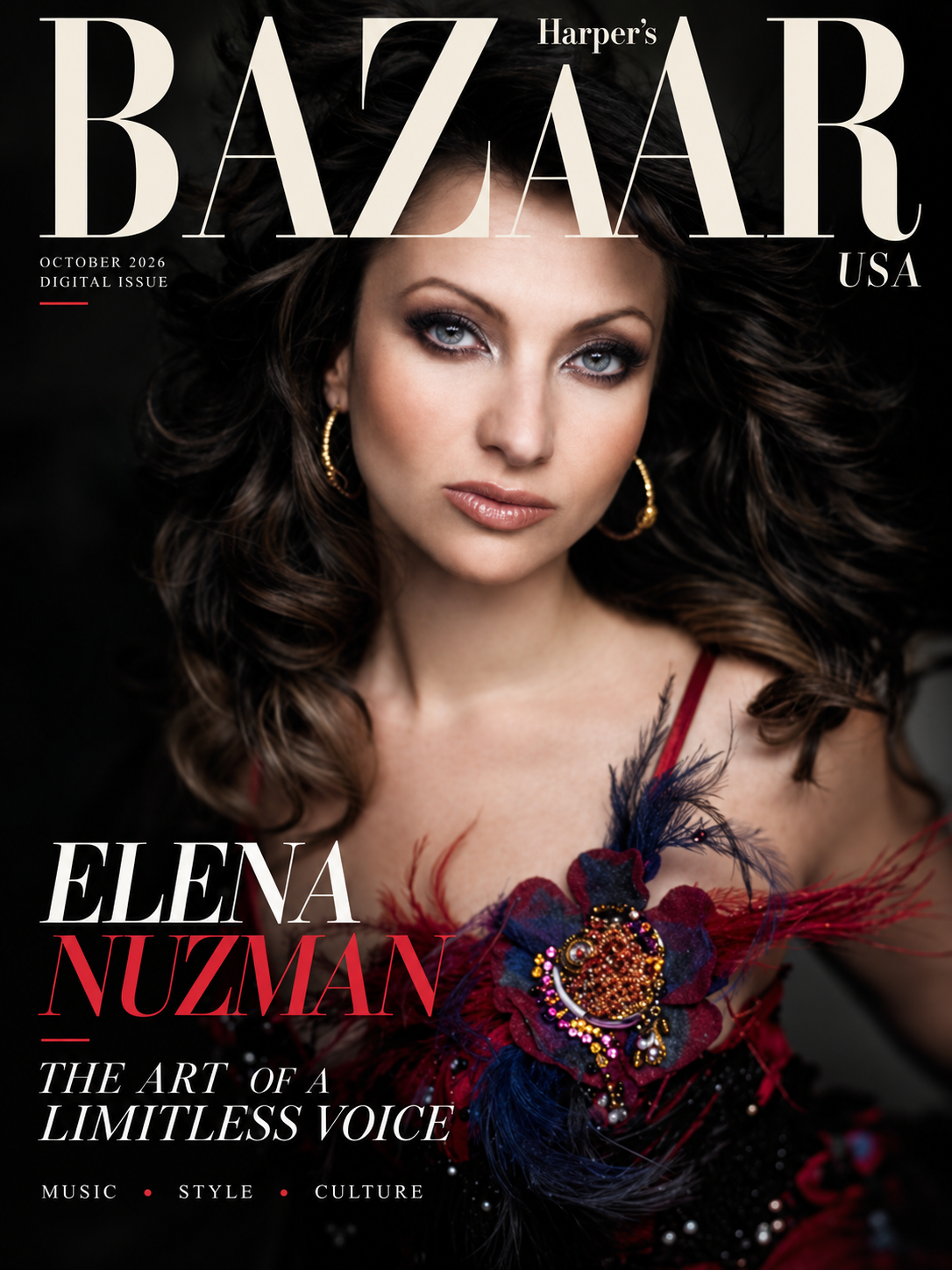
Elena Nuzman’s story belongs to the second kind.
Her path began with a piano in Moldova and developed through years of classical study, international education, vocal performance, rock and pop, composition and recording. Each stage introduced a different dimension of her artistry.
What makes the journey compelling is the way those stages remain connected.
The young child who reproduced melodies by ear is still present in the concert pianist. The concert pianist remains present in the vocalist. The vocalist informs the composer.
Her career is therefore less like a series of separate chapters and more like one long musical composition.
The First Notes
Nuzman was born into a family of professional musicians in Moldova.
Music surrounded her from the beginning, but her own instinct quickly became evident. At two years old, she was already reproducing melodies on the piano by ear.
That early ability developed into formal training when she entered a prestigious music Lyceum for gifted students at seven.
The years that followed demanded commitment.
Classical music requires patience. Progress is measured not simply in months or years but in countless hours of practice, careful listening and gradual technical development.
For Nuzman, those years created the foundation upon which everything else would later be built.
Education Becomes Experience

Her musical development eventually moved beyond Moldova.
Nuzman’s journey took her through Russia, France, the United States, Israel and Canada before continuing in Germany.
At the Robert Schumann University of Music in Düsseldorf, she completed a master’s degree in concert piano.
The achievement represented years of preparation.
Yet education was only one part of the experience. International exposure also widened her perspective as an artist.
Different countries bring different audiences, traditions and cultural relationships with music. For a performer, those experiences can influence not only what is played but how it is communicated.
Nuzman continued to develop as both a musician and a performer.
A Voice Enters the Story
The next major chapter arrived through singing.
Nuzman participated in a vocal competition and won first prize in the Rock-Pop category.
It was an unexpected but important development.
Until then, the piano had been the central instrument of her professional identity. Now her own voice became another means of expression.
Her four-octave range gave her a remarkable technical resource, but the real significance was artistic. Singing placed the performer more directly inside the emotional world of a song.
The piano had taught Nuzman how to communicate through music.
The voice taught her how to communicate through herself.
The Contemporary Chapter
Her debut album, I Believe In You, marked a move into a broader musical environment.
The project combined vocal performance with pop and rock influences and reached the German Newcomer Charts, where it remained in the Top 10 for several weeks.
Her interpretation of Whitesnake’s “Here I Go Again” became another important part of her performance repertoire.
The song brought out a different side of the artist.
There was greater intensity, a stronger contemporary stage presence and a direct connection with audiences outside the traditional classical environment.
Performances at major events, including New Year’s Eve celebrations at Berlin’s Brandenburg Gate, showed how far her career had expanded.
Looking Back Without Standing Still
After moving into contemporary music, Nuzman did not turn her back on classical tradition.
Instead, she revisited it from a different perspective.
Liebestraum explored the emotional world of Romantic-era music through contemporary arrangements and songwriting.
The project represented an important creative statement.
Nuzman was not trying to decide whether she belonged to classical or contemporary music.
She was demonstrating that both could exist within her.
The title track eventually surpassed four million views on YouTube and received the IMPALA Silver Award.
The response showed the potential of bringing classical inspiration to audiences in a contemporary form.
Becoming a Creator
Composition represented another significant stage in Nuzman’s development.
A performer spends years interpreting the musical ideas of others.
A composer begins with an empty page.
That difference requires another type of confidence.
Nuzman increasingly embraced songwriting and composition, allowing her experiences as a pianist and vocalist to influence the music she created.
Her classical background provided the technical foundation.
Her contemporary experience provided another emotional vocabulary.
Her compositions could therefore emerge from multiple musical worlds at once.
The Meaning of My Piano And I
In 2025, Nuzman released My Piano And I.
The album includes celebrated songs, new compositions and English versions of some of her works, bringing together several parts of her artistic journey.
The title is particularly meaningful because the piano has remained constant throughout the changes.
It was there at two.
It was there during her classical education.
It was there through international study and professional performance.
It remained there when singing entered her career.
And it continued to be present as she developed as a composer.
The relationship has survived every transformation.
The Musician Behind the Achievements
It is easy to tell an artist’s story through accomplishments.
Albums can be listed.
Degrees can be mentioned.
Performances can be remembered.
Awards and milestones can provide a timeline.
But the deeper story is usually found in what connects those achievements.
For Nuzman, that connection is curiosity.
She has repeatedly allowed herself to explore another possibility.
What if the pianist sings?
What if classical music can become contemporary?
What if Romantic melodies can inspire new songs?
What if a performer becomes a composer?
Those questions have shaped the direction of her career.
A Career Without a Final Chapter

One of the most interesting things about Elena Nuzman’s story is that it does not feel finished.
Her journey has already crossed multiple artistic territories, yet each achievement has opened another creative possibility.
The child prodigy became a concert pianist.
The pianist became a vocalist.
The vocalist explored rock and pop.
The performer developed as a composer.
The composer returned to the piano with a lifetime of experience behind her.
None of these identities cancels the others.
They strengthen them.
Written in Music
Perhaps the best way to understand Elena Nuzman is not through a single title.
She is a pianist, but that does not explain the singer.
She is a singer, but that does not explain the composer.
She is a composer, but that does not explain the classical discipline behind her work.
Her identity exists in the space where all of those roles meet.
Her life has effectively been written in music, one chapter at a time.
The earliest pages were created in Moldova, with a child listening carefully to melodies.
The later chapters travelled through classrooms, concert halls, international stages, recording studios and contemporary performances.
The story continues to develop.
And perhaps that is the most fitting quality of Elena Nuzman’s artistry: she has never treated music as a finished destination.
For her, every new sound can become another beginning.